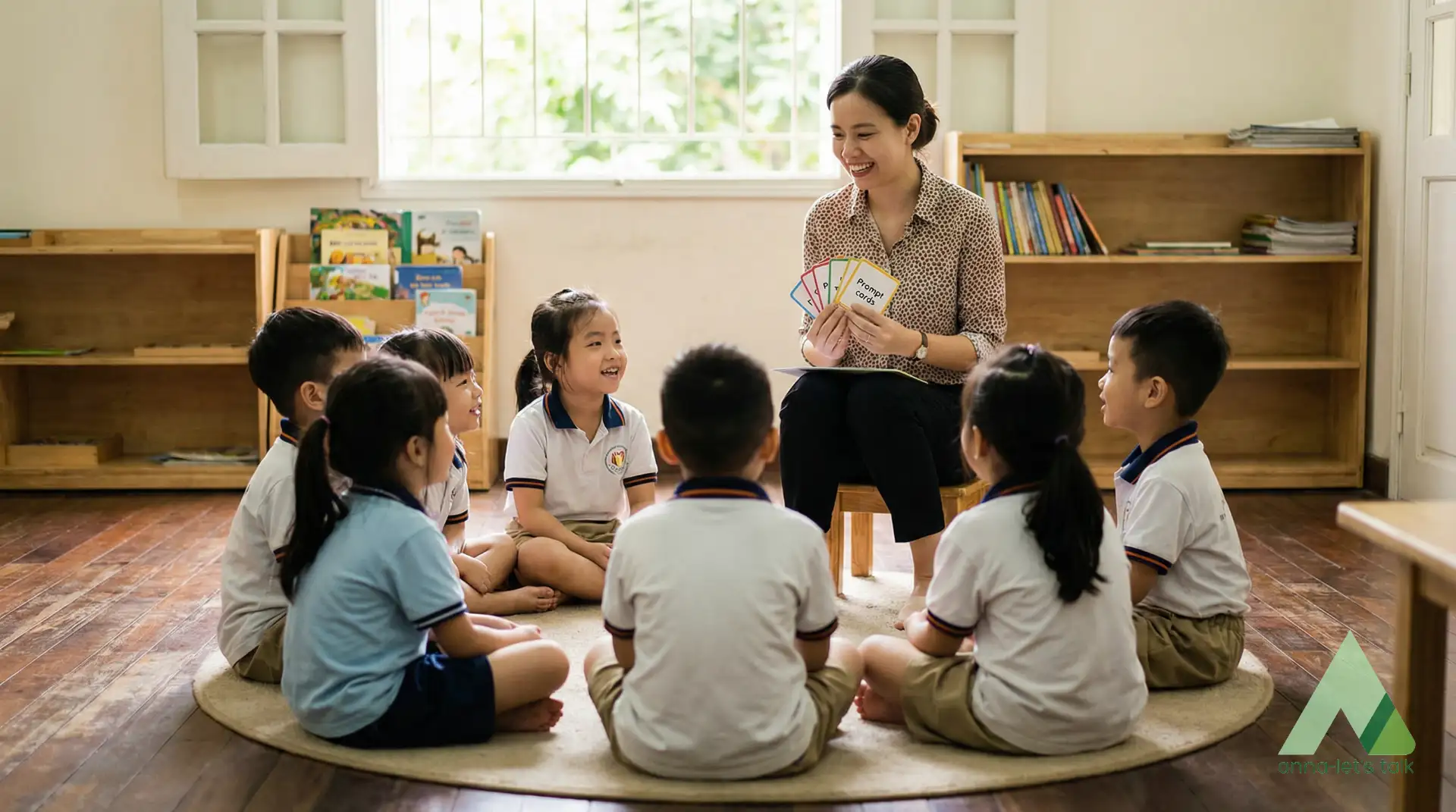
Mixed-Language Learning in Nha Trang: Why Kids Speak Up Faster
On Tran Phu beach, a tourist smiles and asks your child, "Do you want to play?" Your child answers with a mix of Vietnamese, a few English words, and a confident nod - then runs off like nothing happened. Later, you replay the moment and wonder if that mix helps your child speak... or if it will confuse them. If you live here, you see these mixed-language moments all the time, and you might still feel unsure about what they mean. Let us look at what actually builds speaking confidence in real life, not in theory - based on the way children communicate every day in Nha Trang.
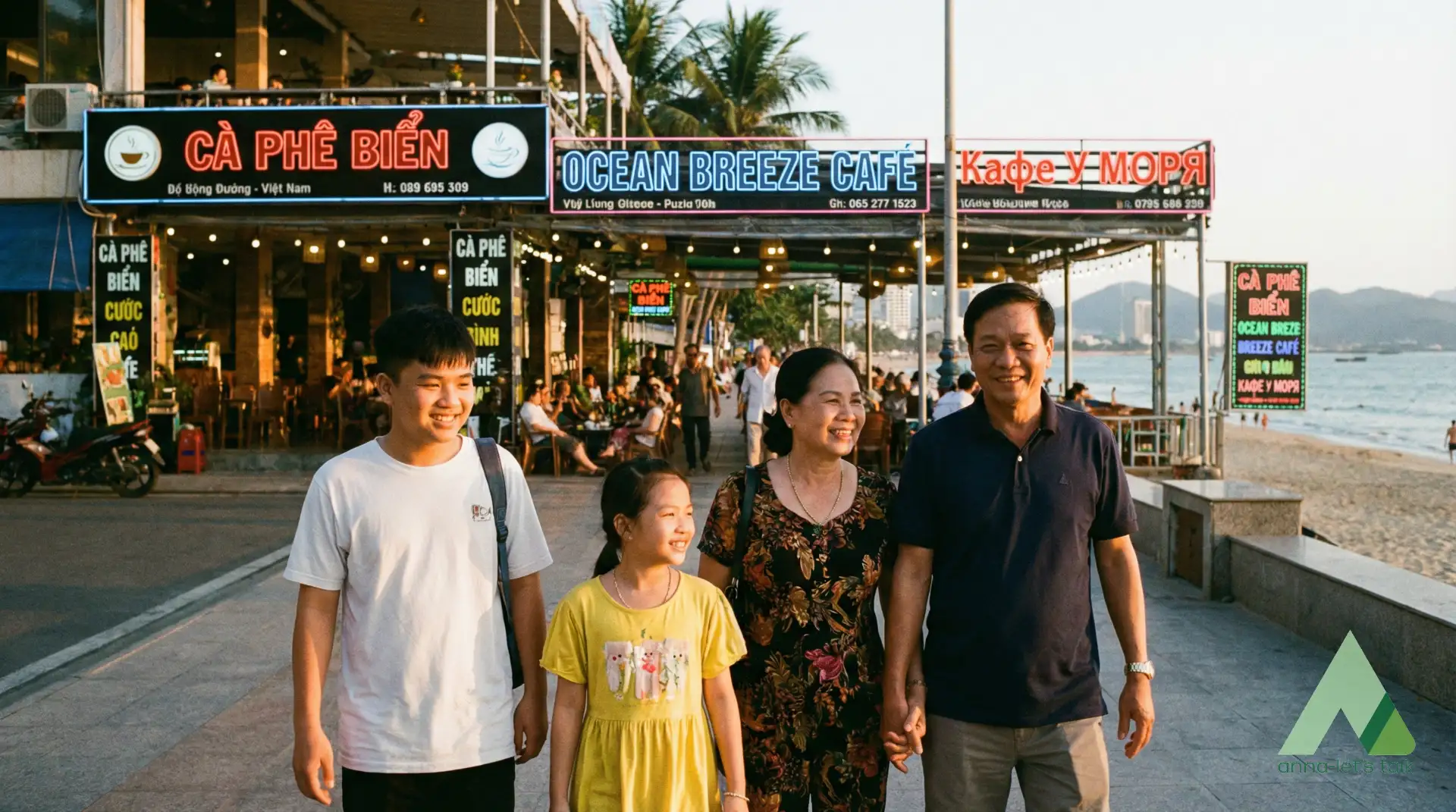
The Real Question
When families ask about mixed-language learning Nha Trang, they usually mean something simpler than "How many words will my child learn?"
They ask:
"If my child hears Vietnamese and English (and other languages) in daily life, will it help them speak with confidence - or will it slow them down?"
What Parents Often Get Wrong About Mixed-Language Exposure
Here is the counterintuitive part that surprises many parents:
Children do not get confused because they hear more than one language. They struggle when adults turn language into a test.
Kids can handle Vietnamese at home, English in class, and a random mix at a cafe. They do it the same way they handle different voices, different games, and different rules with different people. The "confusion" usually shows up when a child feels pressure to perform.
You might recognize the pressure patterns:
- A child answers in Vietnamese and an adult interrupts: "No, say it in English."
- A child searches for a word, and someone rushes them: "Come on - quickly."
- A child mixes languages, and a parent worries out loud: "You're mixing again."
That kind of moment teaches the child something bigger than vocabulary. It teaches them: speaking is risky.
Mixed-language exposure works best when it teaches the opposite: speaking is flexible. Confident speakers do not wait for perfect words. They keep communication moving. They use what they have, adjust, and try again.
So instead of trying to separate languages perfectly (which rarely fits real life in a city like Nha Trang), you can focus on something more powerful: flexibility with support.
The Bridge-and-Continue Language Flow Environment
To understand mixed-language learning without making it complicated, I like this simple lens:
The Bridge-and-Continue Language Flow Environment
In this environment, your child learns one main habit: Build a bridge with any words you have - and continue the conversation.
That is it.
A bridge can be:
- one English phrase inside a Vietnamese sentence,
- a gesture plus a clear word,
- a "close enough" sentence that still gets the message across.
And "continue" means your child keeps interacting instead of freezing.
You can see this lens in everyday life:
Your child wants coconut ice cream at a beach kiosk. They say: "Con muốn... ice cream... cái này." If you treat that like a mistake, the conversation stops. If you treat it like communication, you can bridge and continue:
You might say, "Ice cream, yes. Can I have this one, please?" Then you let them repeat one small piece - or you just keep going while they listen.
Over time, kids collect "bridge pieces" that unlock speaking:
- "Can I..."
- "I want..."
- "This one"
- "How much?"
- "Thank you"
- "Again, please"
Notice what happens here. The child does not need a perfect sentence to join real life. They need a way to stay in the conversation. This lens also changes what you listen for. Instead of counting mistakes, you watch for signs of flow:
- Do they try to respond quickly?
- Do they stay calm when they do not know a word?
- Do they take another turn in the conversation?
That flow builds real-world communication skills faster than "perfect separation" ever will.
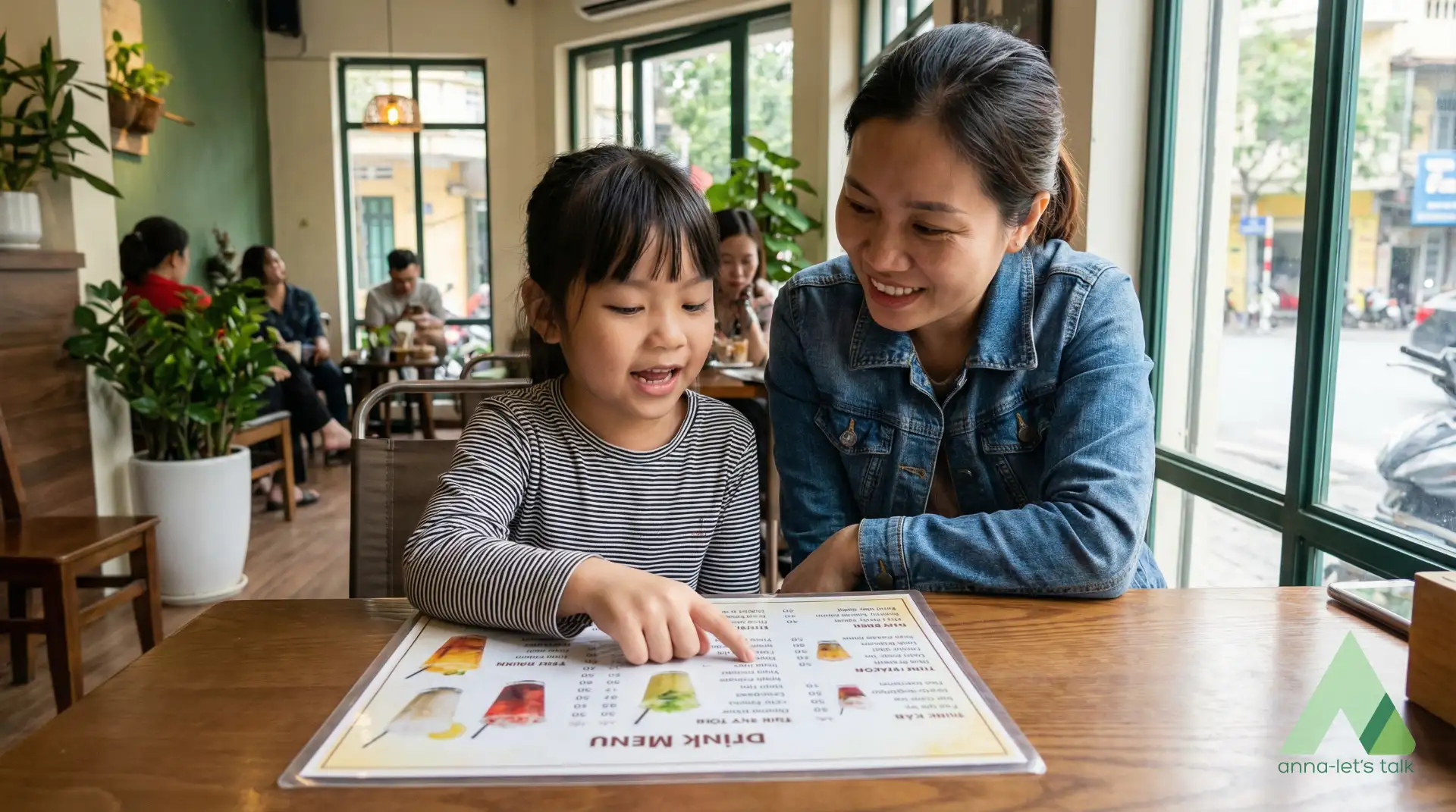
Mixed-Language Learning Nha Trang: The Nha Trang Language Environment
Nha Trang gives children a special kind of language exposure because the city speaks in layers.
On an ordinary week, your child might hear:
- Vietnamese at home, with grandparents or neighbors
- English in a kids' class or with an expat parent
- English from cafe menus, hotel staff, and tour groups
- Korean, Russian, and Chinese in the night market, on the beach walkway, or near popular photo spots
This happens in very normal places:
- 2/4 Square when families walk in the evening and tourists stop for photos
- The Nha Trang Night Market where vendors repeat simple phrases to visitors
- Around Po Nagar Cham Towers, where guides and guests speak in several languages
- In cafes that line Tran Phu Street, where you hear a mix of orders, accents, and polite small talk
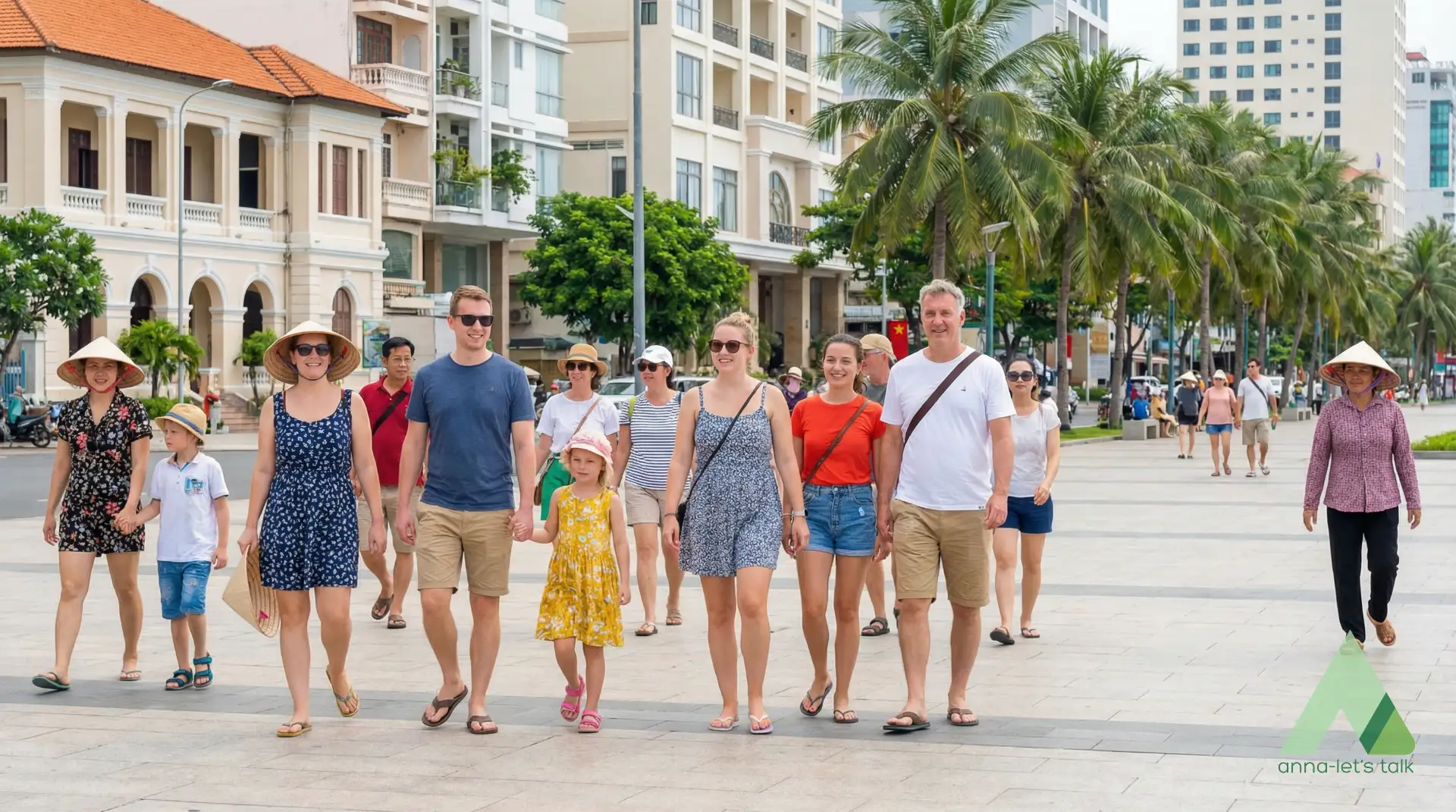
Even if your child does not speak to visitors every day, they still absorb an important message: language lives in real places and real moments.
At the same time, the city has limits, and it helps to name them honestly:
- Not every local setting invites conversation with strangers.
- Not every staff member feels comfortable in English.
- Some children feel shy with unfamiliar accents or fast speech.
That is normal. You do not need constant interaction. You need repeated, low-pressure chances to listen, respond, and try again. That is exactly what a mixed-language environment can offer when you keep the focus on flow.
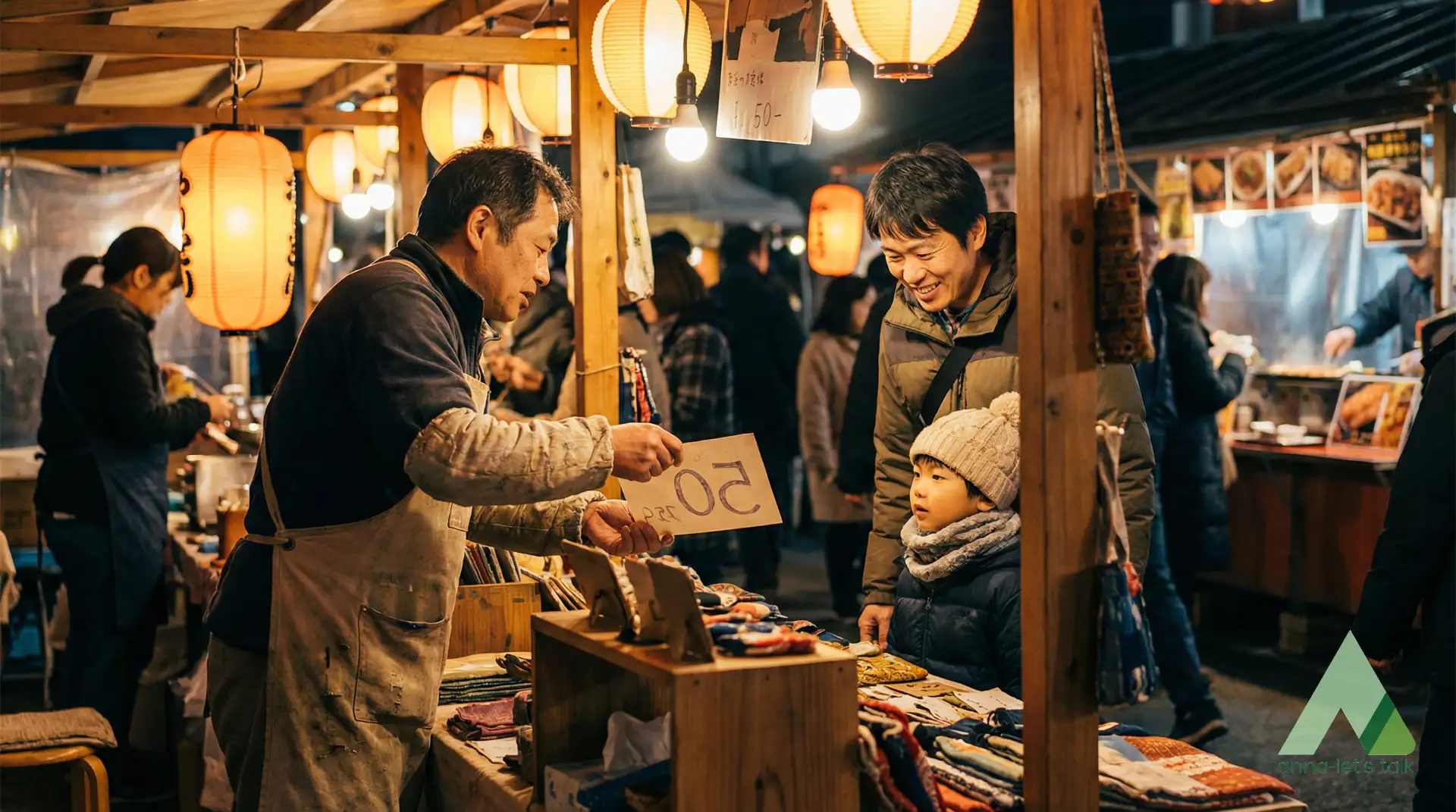
Two short family scenarios from daily Nha Trang life
Scenario 1: The cafe order on Tran Phu A Vietnamese mom and her French partner sit with their 6-year-old at a cafe near the beach. The child hears Vietnamese at home, some English cartoons, and French from Dad. The waiter asks, "What would you like?" The child whispers to Mom in Vietnamese. Mom smiles and says, "You can tell him. Just use your words." The child says, "I want... mango juice... please." It is not perfect. It is real. And the child's face says, "I can do this."
Scenario 2: The beach game with visitors A local Vietnamese family brings their 8-year-old to the beach in the late afternoon. Two kids visiting from abroad kick a ball nearby. The children start playing together. Your child says, "Đá!" then adds, "Kick! Kick!" Everyone laughs and keeps playing. No one stops the game to correct grammar. The child learns the most important speaking lesson: communication works.
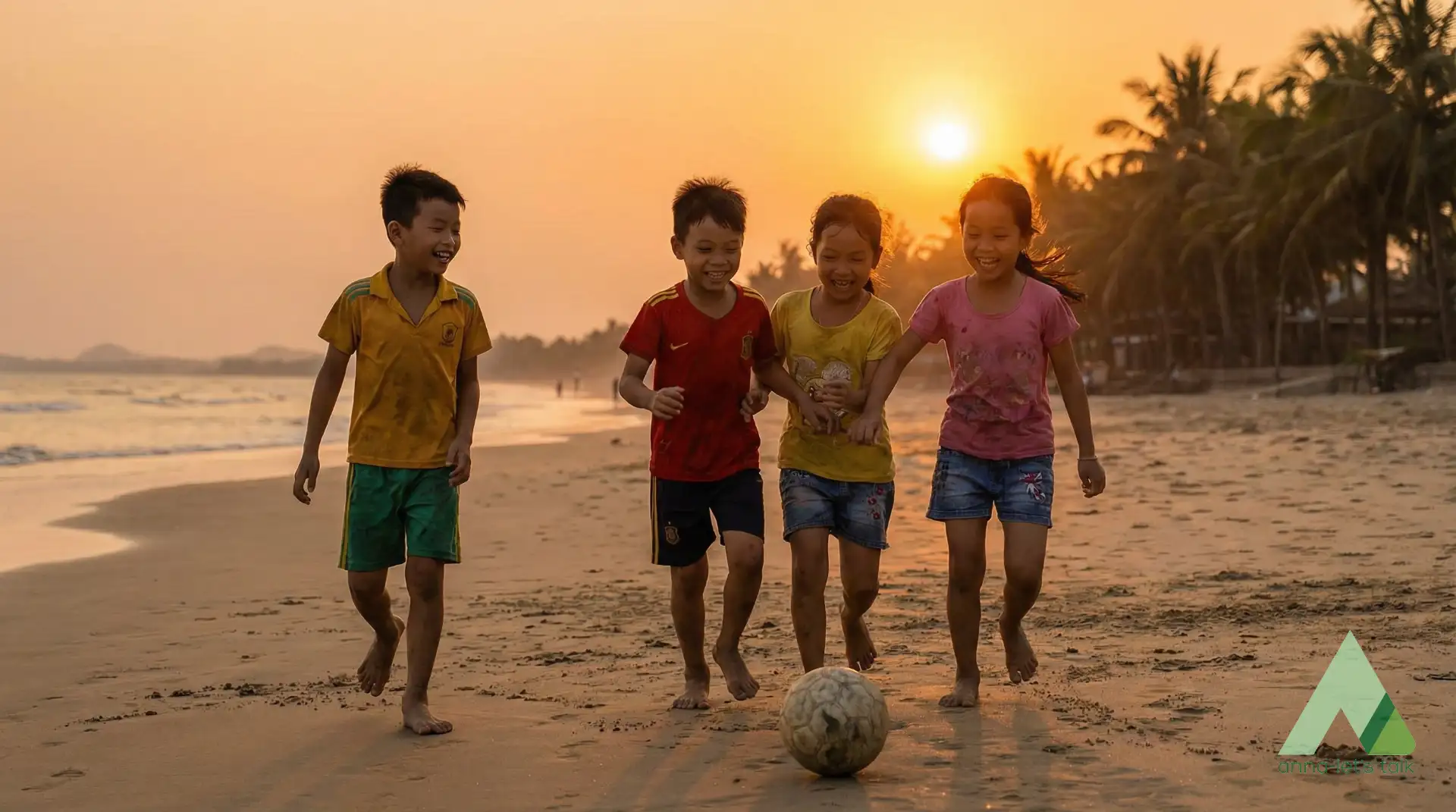
How Mixed-Language Exposure Shapes Real Communication
Parents often look for "results" like vocabulary size or test scores. But when you watch children in mixed-language environments, you notice changes that matter more for speaking confidence.
You start to see a child who:
- answers faster, even with simple language
- tries again after a mistake instead of going silent
- uses voice and body together (tone, gesture, eye contact)
- asks for help in a natural way: "What's this?" "How to say...?"
- handles gaps without panic: "Umm... wait... cái đó... the big one!"
That last skill - handling gaps - often decides whether an English Vietnamese child speaks in public or stays quiet. Kids do not stop speaking because they lack knowledge. They stop because they fear getting stuck.
Mixed-language exposure, done with a relaxed attitude, teaches them a powerful habit: If I do not know a word, I can still communicate.
This also improves pronunciation in a practical way. When a child hears English in different places - teachers, parents, tourists, songs, short conversations - they learn to listen actively. They notice rhythm and stress. They experiment. They do not just repeat one "classroom voice."
I have worked with multilingual children Vietnam, and the confident speakers almost always share one thing: they got comfortable speaking before they got accurate. Accuracy came later because they kept talking.
That is also the quiet truth behind many "bilingual education benefits." The biggest benefit is not perfect grammar early. It is the courage to use language with people.
How Parents Can Support Healthy Language Flow at Home
You do not need strict rules like "Only English on Mondays." In many families, those rules create stress, and stress blocks speech.
Instead, support language flow in ways that feel normal:
Respond to meaning first
When your child speaks, show them you understand before you adjust language.
- Child: "Con muốn cái blue one."
- Parent: "The blue one - okay. You want the blue one."
You keep the bridge and continue.
Keep "tiny repeat" available, not forced
If your child seems open, invite a short repeat: "You can say: This one, please." If they resist, do not push. You can model it again later.
Create daily "real speaking" moments
Pick moments that already happen:
- ordering a snack
- greeting a neighbor
- asking for the bill
- telling a relative about their day on a video call
- asking for a size or price in a shop
You do not need more activities. You need more turns.
Use mixed-language as a tool, not a problem
Sometimes Vietnamese helps your child express a bigger idea. Let them say it. Then you can offer one English version in a calm way:
"Oh, you mean you felt bored. In English: I felt bored."
Build a home habit of "repairing," not "correcting"
Confident speakers repair naturally:
- "I mean..."
- "Not that one... this one."
- "Let me say again."
You can model that in both languages. For a gentle routine guide, see raising bilingual kids in Nha Trang beyond the classroom.

Common Parent Concerns (and What Actually Helps)
"My child mixes languages in one sentence. Should I stop that?"
No. Mixing often shows that your child thinks fast and uses every tool available. If you stay calm and model a better phrase, your child will sort it out over time. Stopping them mid-sentence often hurts confidence more than it helps accuracy.
"What if English becomes stronger than Vietnamese?"
This depends on the child's environment. In Nha Trang, Vietnamese usually stays strong because school, family life, and community run in Vietnamese. If you want to protect Vietnamese, give it meaningful space: family stories, grandparents, books, and real conversations - not just "speak Vietnamese because I said so."
"What if Vietnamese stays stronger than English?"
That is also normal. Vietnamese carries daily life. English grows when your child uses it for real interaction. Keep English connected to people and moments - short talks, classes focused on speaking, and small daily phrases - not long drills.
"My child understands English but refuses to speak."
This is common with English Vietnamese children. Understanding feels safe. Speaking feels public. Reduce pressure, give them predictable phrases, and celebrate attempts instead of accuracy. Start with low-stakes speaking: one phrase at the cashier, one greeting, one answer in class.
For more targeted support, see conversation English practice in Nha Trang.
"Will my child start speaking later because of two languages?"
Many children take time to speak confidently even in one language. Two languages do not automatically cause delays. Pressure, fear, and lack of speaking chances cause delays more often. Focus on interaction, not comparison with other kids.
FAQ
1) What does "mixed-language learning Nha Trang" look like in daily life?
It looks like small moments: a child hearing English at a cafe, Vietnamese at home, and a mix at the beach or night market. The learning happens when your child responds, tries a phrase, or keeps a conversation going.
2) Should parents separate languages strictly at home?
You can if it feels natural for your family, but you do not need strict separation for success. Many families do better with flexible routines that keep communication warm and flowing.
3) My child copies tourist accents or says words "funny." Is that bad?
Not at all. Kids experiment with sounds. If you keep a positive tone and model clear pronunciation, they will adjust. Playful imitation often shows comfort, not a problem.
4) How much English exposure is enough for my child to speak?
There is no magic number of hours. Speaking confidence grows from repeated, low-pressure chances to talk. Ten short speaking moments across a week can matter more than one long lesson.
5) What if my child feels shy around foreigners in Nha Trang?
Shyness makes sense. Start small: a smile, "Hello," "Thank you," or "Bye." Let your child watch first. Confidence often comes after a few safe experiences.
6) Can mixed-language exposure help pronunciation?
Yes, when children hear English from different people and use it in real situations. They learn rhythm, stress, and listening skills that support clearer speaking over time.
7) Do bilingual education benefits depend on going to an international school?
No. School helps, but real-world communication grows in everyday life too. A child can build strong speaking habits through family routines, community activities, and supportive speaking classes. If you are exploring class options, see English speaking classes in Nha Trang for kids.
Gentle Closing + Soft CTA
Living here means your child does not learn language in a clean, separated way - and that is a good thing. Nha Trang offers a naturally mixed soundscape: beaches, cafes, markets, visitors, and daily Vietnamese life. When you use the Bridge-and-Continue Language Flow Environment, you stop treating mixed language as a problem and start treating it as practice for real communication.
If you want a supportive place where children practice speaking clearly, build confidence, and learn how to keep conversations moving, see our English speaking classes for kids in Nha Trang at Anna Let's Talk. You can observe a class or try one session and simply notice how your child responds in a mixed-language setting. Over time, mixed-language learning Nha Trang can feel less like a worry and more like a normal, helpful part of your child's voice.